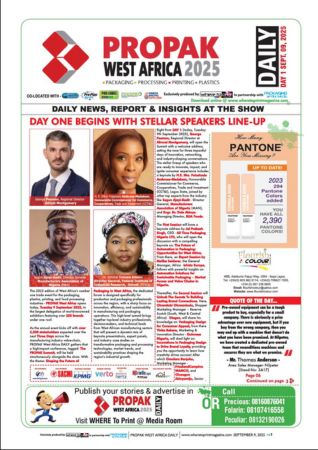




Industry leader Ankan Graphics Limited is redefining manufacturing efficiency with its curated portfolio of printing, packaging, label, post-press, and corrugation machinery. Collaborating with exclusive global technology partners, Ankan Graphics focuses on a simple but powerful promise: delivering automation, premium quality, and a rapid return on investment. What does it take to thrive in today’s economic landscape? Check this out in this exclusive SPECIAL FEATURE INTERVIEW with Managing Director/CEO Mr. Kaleeswaran Nadar, who simplifies complex industry dynamics—touching on standardization, regulatory alignment, and value addition. Read the full interview to also learn how Ankan Graphics is tailoring its solutions specifically for the Nigerian and wider West African markets.
WHICH SPECIFIC PRINTING, PACKAGING, AND CORRUGATION MACHINERY FROM YOUR EXCLUSIVE PARTNERS (SUCH AS HONTEC, AUTOPRINT OR WENZHOU YOUBOND) ARE YOU HIGHLIGHTING THIS YEAR?
This year, Ankan Graphics LTD is highlighting a broad portfolio of printing, packaging, label, post-press, and corrugation machinery from our exclusive technology partners, with a strong emphasis on solutions that deliver productivity, automation, quality, and a fast return on investment.
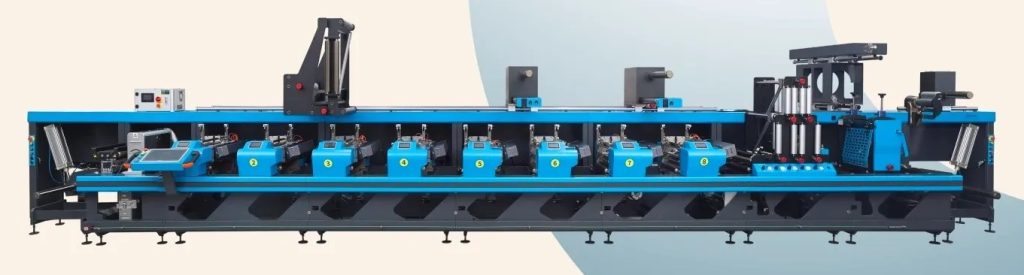
© The legendary Hontec FlexiCon 460 flexography printing machine
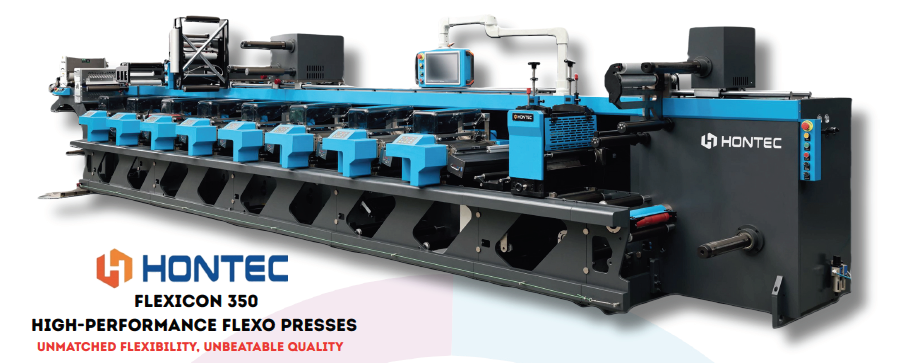
From Hontec, we are particularly focusing on advanced narrow-web flexographic technology for labels and flexible packaging, including the FlexiCon range and the new-generation FlexiCon Neo Series. These solutions are designed to reduce changeover time, minimize material waste, and give converters greater flexibility in producing high-quality labels and packaging. Hontec is also bringing its latest technologies to the West African market. At Autoprint, we highlight high-performance post-press solutions, including die-cutting, stripping, hot foiling, coating, and finishing equipment. The portfolio includes machines such as the Dextra 89 HS, Blankmatic 105 RS, and FSDDC 1070 Digital Die Cutter, which are aimed at improving finishing speed, accuracy, automation, and overall production efficiency.
For corrugation and packaging, our portfolio includes Wenzhou Youbond solutions, particularly flute-laminating machinery, alongside corrugation solutions designed to support the growing demand for high-quality carton and box production across Nigeria and West Africa. We are also showcasing DGM Global folder-gluing and die-cutting technology for folding-carton production, as well as solutions from our other specialist partners covering digital printing, inspection, sheeting, inks, and packaging conversion. Ankan Graphics has established its portfolio around OEMs including Hontec, Youbond, Autoprint, DGM, and other leading manufacturers.
Our focus, however, is not simply to display individual machines. We want our current customers and prospective ones to see how these technologies can work together as a complete production ecosystem—from printing and converting through die-cutting, folding, gluing, inspection, and finishing. Ultimately, the machinery we are highlighting this year has been selected with the realities of the Nigerian and West African markets in mind: lower waste, higher productivity, energy efficiency, reliable automation, ease of operation, and strong after-sales support. Our role at Ankan Graphics is to match each customer with the right technology and then support that investment with installation, training, genuine spare parts, and technical service.
HOW DO YOU TAILOR YOUR TURNKEY SOLUTIONS TO BUSINESSES THAT NEED TO MOVE INTO ECO-FRIENDLY OR COMPOSTABLE PACKAGING?
We do this by first understanding each business’s products, packaging requirements, operational processes, and sustainability goals. From there, we recommend the most suitable eco-friendly or compostable packaging materials, formats, and specifications without compromising product protection, presentation, or functionality. Our approach covers the entire transition—from material selection and packaging design to sourcing, production, quality control, and delivery. We also consider factors such as shelf life, durability, branding, regulatory requirements, cost, and end-of-life disposal to ensure the solution is both environmentally responsible and commercially viable. Most importantly, we make the transition as seamless as possible. Rather than asking businesses to manage multiple suppliers and processes themselves, we provide an end-to-end solution that can be customized to their needs and scaled as their business grows.
WE UNDERSTAND THAT YOUR TECHNICAL TEAM PLACES A HEAVY FOCUS ON PREVENTING DOWNTIME. HOW DO YOU MANAGE PREVENTIVE MAINTENANCE SCHEDULES IN THE NIGERIAN AND WEST AFRICAN MARKETS?
At Ankan Graphics, we take a proactive approach to preventative maintenance because we understand that unexpected equipment downtime can have a direct impact on our customers’ production schedules and profitability. We develop maintenance schedules around each machine’s operating hours, workload, manufacturer’s recommendations, and production demands. Our technical team carries out regular inspections, servicing, cleaning, lubrication, calibration, and timely replacement of wear-and-tear components to identify potential problems before they result in breakdowns.
In the Nigerian and wider West African markets, we also recognize the importance of planning for challenges such as power fluctuations, demanding operating conditions, logistics, and the availability of critical spare parts. We therefore plan for essential components and consumables and, where necessary, maintain access to commonly required spares to reduce response and repair times. We also coordinate maintenance activities with our customers’ production schedules, carrying out major servicing during planned shutdowns or periods of lower production wherever possible. This allows us to maintain equipment reliability while minimizing disruption to operations. Our objective at Ankan Graphics LTD is to move beyond reactive repairs and establish a maintenance culture based on prevention, early fault detection, rapid technical response, and long-term equipment reliability. This ultimately helps our customers maximize uptime, extend the working life of their equipment, and maintain consistent production output.
HOW DO YOU GUARANTEE THE AVAILABILITY OF ORIGINAL SPARE PARTS AND SPECIALIZED INKS FOR SPECIFIC PRESS WITHOUT CAUSING PROJECT DELAYS?
At Ankan Graphics LTD, we understand that the availability of genuine spare parts and the correct inks is critical to keeping our customers’ projects and production schedules on track. Our approach is therefore based on planning, genuine OEM sourcing, and maintaining strong relationships with our international technology partners. For critical machinery, we identify the essential wear parts, consumables, and components required for each installation and, where appropriate, recommend that key spares are planned or stocked ahead of time. This allows us to reduce the risk of waiting for parts after a breakdown has already occurred. We source original spare parts directly through our authorized technology partners and manufacturers, ensuring that customers receive components that meet the equipment manufacturer’s specifications. Our technical team also helps customers identify the correct part numbers and specifications to avoid delays caused by ordering the wrong components.
For specialized inks, we work with approved ink manufacturers and suppliers to ensure that the ink system is compatible with the specific press, substrate, application, and required print quality. We also plan ink requirements for major projects, particularly where specialized colours, coatings, or formulations are involved. Logistics is another important part of our approach. We monitor lead times, communicate requirements early, and coordinate shipments so that critical parts and consumables arrive before they are needed wherever possible. For urgent requirements, we work with our supply partners to identify the fastest available delivery option. Most importantly, we don’t wait for a production problem before thinking about parts and consumables. Our objective is to anticipate requirements, maintain visibility of the supply chain, and have the right materials available at the right time. This gives our customers greater confidence that their machines will remain productive and that projects can be completed without avoidable delays.
FROM PLACING AN ORDER TO FINAL INSTALLATION AND TEST RUNS ON THE CLIENT’S FACTORY FLOOR, WHAT IS YOUR TYPICAL TURNAROUND TIME?
We do not apply a single fixed turnaround time to every project because the timeline depends on the type and specification of the machine, whether it is a standard or customized configuration, production and shipping schedules, site readiness, and the complexity of installation and commissioning. Typically, once an order is confirmed, we move immediately into production planning, documentation, logistics, and site-preparation coordination. While the machine is being manufactured and shipped, our team works with the client to ensure that the factory floor, electrical requirements, utilities, access, and other installation requirements are ready before the equipment arrives.
For a standard machine that is readily available from the manufacturer, the process can move relatively quickly. For larger or specially configured printing, packaging, or corrugation equipment, the overall lead time can extend to several months because of manufacturing, international shipping, customs clearance, and installation requirements. Once the equipment reaches the client’s facility and the site is confirmed ready, our technical team handles installation, commissioning, calibration, operator training, and production test runs. We do not consider the project complete simply because the machine has been delivered; our objective is to ensure that it is properly installed, producing to specification, and that the customer’s operators are confident using it.
Our approach is therefore to provide the client with a project-specific delivery and commissioning schedule from the outset, with clear milestones from order confirmation through shipment, installation, test production, and final handover. This gives the customer visibility throughout the process and helps us identify and resolve potential delays before they affect the project.
WITH THE CURRENT ECONOMIC LANDSCAPE AND LOCAL MANUFACTURING TRENDS, WHAT PRINTING AND PACKAGING TECHNOLOGY DO YOU CURRENTLY ADVISE COMPANIES TO INVEST IN?
Our advice is to invest in printing and packaging technology that improves productivity, reduces waste, lowers operating costs, and gives manufacturers greater flexibility rather than simply investing in the most expensive or newest machine. Given the current economic environment in Nigeria and the wider West African market, we are seeing strong value in automation, digitalization, energy-efficient equipment, and integrated finishing and converting solutions. These technologies can help companies reduce dependence on manual processes, improve consistency, shorten production cycles, and make better use of raw materials.

For commercial and industrial printers, we encourage investment in modern digital printing and automated post-press equipment, particularly where customers require shorter runs, fast turnaround, variable data, personalization, or frequent job changes. For packaging manufacturers, flexographic printing, high-speed die-cutting, folder-gluing, laminating, and inspection systems can provide significant productivity benefits as demand for locally produced packaging continues to grow. We also believe that corrugation and carton-converting technology represents an important opportunity. As more products are manufactured, processed, and distributed locally, businesses need reliable local capacity for cartons, boxes, labels, and other forms of packaging. Investing in efficient converting equipment can therefore help manufacturers serve this growing demand while reducing reliance on imported finished packaging.
Another important area is quality control and inspection technology. As brands become more demanding about print consistency, colour accuracy, registration, and packaging defects, automated inspection can help companies detect problems early, reduce waste, and protect their reputation. Ultimately, we don’t believe there is a single technology that is right for every company. At Ankan Graphics LTD, we assess the customer’s production volume, product mix, substrate requirements, labour structure, energy costs, available space, growth plans, and return-on-investment expectations before recommending a machine. Our philosophy is simple: Invest in technology that solves a real production problem today while giving the business the capacity and flexibility to grow tomorrow.
ARE YOUR PACKAGING AND FORMING MACHINES COMPLIANT WITH GLOBAL FOOD SAFETY STANDARDS (LIKE FDA OR CE) AND APPROVED BY NAFDAC FOR LOCAL PRODUCTION?
Yes, we work with reputable international OEMs and specify machinery according to the technical and regulatory requirements of each customer’s application. Our portfolio includes established manufacturers such as Autoprint, Hontec, Wenzhou Youbond, DGM Global, and other specialist technology partners. Where a machine is intended for food, pharmaceutical, or other regulated packaging production, we work with the OEM to confirm the relevant CE requirements, electrical and machine-safety standards, materials of construction, and application-specific documentation before installation. Where FDA-related requirements apply, these are normally relevant to the materials, inks, coatings, adhesives, and other components that come into contact with the packaged product—not simply to the printing or converting machine itself.


Regarding NAFDAC, it is important not to describe a packaging machine as being “NAFDAC approved” unless a specific approval has actually been issued for that particular application. NAFDAC requirements generally concern the regulated product and its manufacturing/packaging process. Therefore, we work with the customer to ensure that the proposed machinery, packaging materials, inks, coatings, and production process can meet the applicable Nigerian regulatory requirements. Our role is to provide the appropriate technology and technical documentation from the OEM, support installation and commissioning, and help the customer establish a production process that meets the relevant standards. For a specific food, pharmaceutical, or other regulated packaging project, we review the application with the client and OEM before the machine is ordered, so that compliance requirements are built into the specification rather than addressed after installation.
In short, our commitment is to internationally source properly specified equipment, supported by the relevant OEM documentation and localized technical support—while recognizing that final regulatory approval depends on the complete production system, materials, product, and intended application.
WHICH OF YOUR FLEXIBLE PACKAGING AND POUCH-MAKING MACHINERY HANDLES BIO-PLASTICS, RECYCLABLE FILMS, OR SUSTAINABLE PAPERS WITHOUT JAMMING OR TEARING?
We can not claim that one machine can automatically run every bio-plastic, recyclable film, or sustainable paper without adjustment. The key is matching the substrate to the machine configuration, converting process, inks, adhesives, and operating parameters. For flexible packaging and label applications, Hontec’s narrow-web flexographic presses are among the solutions we would recommend. The latest FlexiCon Neo platform is specifically being positioned for sustainable production, including compatibility with mono-material PE substrates, while supporting LED-UV curing and waste-reduction technologies. For paper-based and corrugated packaging, Youbond laminating technology is another important part of our portfolio. It is designed for high-precision lamination of printed top sheets to corrugated flutes, making it particularly relevant for businesses moving toward recyclable paper-based packaging. Ankan Graphics also offers complete corrugation solutions through its partner portfolio.

However, avoiding jams, tearing, stretching, or registration problems is not simply a matter of choosing the machine. Sustainable substrates can behave differently from conventional materials in terms of tensile strength, thickness, coefficient of friction, surface treatment, ink adhesion, moisture, and web tension. That is why, before recommending equipment, our technical team looks at the customer’s actual substrate and application. We work with the OEM to establish the appropriate web tension, nip pressure, drying or curing requirements, adhesive system, speed, and other machine settings, and we recommend production trials where necessary.
Our objective at Ankan Graphics is therefore to provide a substrate-specific turnkey solution, rather than simply selling a machine and expecting the customer to solve compatibility issues afterwards. With the right machine configuration, consumables, settings, operator training, and technical support, customers can confidently move toward more recyclable and sustainable packaging materials while maintaining production quality and reliability.
DOES YOUR AUTOMATED FILLING AND SEALING LINES OFFER MODIFIED ATMOSPHERE PACKAGING (MAP) OR VACUUM SEALING OPTIONS TO HELP EXTEND FOOD SHELF-LIFE?
Yes. Ankan Graphics supports customers looking to incorporate vacuum sealing and Modified Atmosphere Packaging (MAP) into automated food-packaging operations, but the exact capability depends on the specific filling, pouch-making, and sealing machine configuration and the product being packaged. For food producers, MAP and vacuum packaging can help extend shelf life by reducing exposure to oxygen and controlling the atmosphere inside the package. However, the correct gas mixture, vacuum level, sealing temperature, dwell time, film structure, and package format all need to be matched to the particular food product.
Our approach at Ankan Graphics LTD is therefore to first understand the customer’s product, required shelf life, packaging material, production speed, and hygiene requirements. We then work with the appropriate OEM and technical partners to specify a suitable automated filling, vacuum/MAP, and sealing configuration rather than assuming that one machine will suit every application. Where required, the packaging line can be designed around complementary processes such as product filling, gas flushing, vacuum extraction, heat sealing, coding, inspection, and final quality control. We also consider the compatibility of the packaging film with the sealing and MAP process to ensure reliable seals and minimize leakage or package failure.
Most importantly, MAP or vacuum sealing is only one part of shelf-life management. The final shelf life depends on the product formulation, microbiological controls, temperature management, packaging material, storage conditions, and validated production process. So our focus is on delivering a fit-for-purpose automated packaging solution that gives the food producer reliable sealing performance, production efficiency, and the appropriate conditions for achieving its validated shelf-life objectives.
HOW DOES YOUR MACHINERY ENSURE CONSISTENT, LEAK-PROOF SEALS ON HIGH-SPEED LINES, ESPECIALLY WHEN HANDLING POWDERY OR GREASY FOOD PRODUCTS?
We understand that seal integrity is critical in food packaging, particularly on high-speed lines where powder, oil, grease, or product residue can easily compromise a seal. Our approach is to ensure that the machine configuration, packaging material, sealing system, and operating parameters are matched to the specific product rather than relying on a one-size-fits-all setup. For powdery or greasy products, the machinery can be configured to control product placement and keep the sealing area as clean as possible before the seal is made. Depending on the application, this may include controlled filling, product settling, dust management, optimized pouch formation, and sealing systems designed for the selected film structure.
At the sealing stage, critical parameters such as temperature, pressure, dwell time, sealing-jaw alignment, and line speed are controlled consistently. This helps create uniform seals even as production speeds increase. Where the application requires it, appropriate seal-bar or jaw configurations can also be selected to accommodate the characteristics of the packaging material. We also place strong emphasis on quality control and preventive maintenance. Worn sealing components, incorrect temperatures, poor alignment, contaminated sealing surfaces, or unstable film tension can all lead to leakage. Regular inspection, calibration, cleaning, and timely replacement of wear parts help maintain consistent sealing performance.
For particularly demanding food products, we recommend conducting production trials using the customer’s actual product and packaging film before finalizing the equipment specification. This allows the OEM and our technical team to establish the correct filling and sealing parameters and verify seal integrity at the required production speed. Ultimately, our objective is to give customers a packaging line that delivers repeatable, high-quality seals at production speed, while minimizing leakage, product contamination, material waste, and unplanned downtime.
WHAT IS THE AVERAGE SETUP AND CHANGEOVER TIME ON YOUR DIGITAL AND OFFSET PRESSES WHEN SWITCHING BETWEEN A SHORT-RUN BUSINESS CARD JOB AND A LARGE BROCHURE RUN?
We generally look at setup and changeover time based on the specific press technology and the complexity of the job rather than applying one fixed figure across all machines. For a digital press, moving from a short-run business-card job to a larger brochure job can typically involve a relatively quick changeover—often in the range of a few minutes to around 15 minutes, depending on the press, substrate, finishing requirements, and whether the next job requires a different paper size or media configuration. One of the major advantages of digital production is that there is little or no conventional plate-making and make-ready process, making it particularly suitable for short runs and frequent job changes.
For a conventional offset press, the changeover is generally longer because it can involve plate changes, washing or changing inks, paper and feeder adjustments, registration, colour balancing, and proofing. A straightforward job change may take roughly 20–45 minutes, while more complex changes can take longer. The difference becomes particularly important when comparing a short business-card job with a large brochure run. We would normally recommend digital printing for highly variable, short-run work, where minimizing setup time and material waste is important. For a large, repeat brochure run, offset printing can become more economical, particularly when the volume justifies the additional make-ready time.
At Ankan Graphics LTD, our focus is therefore not simply on the fastest changeover figure. We help customers select the right press based on run length, job frequency, colour requirements, substrate, finishing, turnaround expectations, and total cost per job. The objective is to minimize non-productive make-ready time while ensuring that the first saleable sheet meets the required quality standard.
WHAT AUTOMATED SOLUTIONS DO YOU OFFER FOR THE BINDERY FLOOR, SPECIFICALLY REGARDING PERFECT BINDING, SADDLE STITCHING, AND HARDCASE (HARDCOVER) BOOK PRODUCTION?
We are particularly focused on bringing Bindex’s automated bindery solutions to printers, publishers, and commercial book producers looking to improve productivity while reducing manual intervention. For perfect binding, Bindex offers automated solutions designed to take printed book blocks through key stages of the binding process with consistent glue application, cover feeding, pressing, and book formation. These systems are particularly suitable for commercial printers and publishers handling medium- to high-volume paperback production, where consistency and fast turnaround are important.


For saddle stitching, our focus is on automated gathering, folding, stitching, and three-knife or trimming processes. These solutions are ideal for brochures, magazines, catalogues, booklets, and other products that require high-speed finishing with consistent page alignment and clean trimming. For hardcase and hardcover book production, Bindex’s automation can cover processes such as case making, book block preparation, casing-in, pressing, and related finishing operations. This is particularly relevant for publishers, educational institutions, premium book producers, and businesses producing durable hardcover products.
The major advantage of these solutions is the opportunity to move from labour-intensive, disconnected bindery operations toward a more integrated and automated production workflow. Automation can improve consistency, reduce handling errors, increase output, and reduce dependence on manual labour. At Ankan Graphics LTD, we also look beyond simply supplying the equipment. We work with the customer to assess their production volume, book formats, paper specifications, binding requirements, available floor space, and expected growth before recommending the appropriate Bindex configuration. Our objective is to help customers build a bindery that can produce higher volumes with consistent quality, shorter turnaround times, less waste, and greater operational efficiency, while providing installation, operator training, technical support, and after-sales service locally.
HOW DO YOUR PUBLISHING PRESSES MINIMIZE PAPER WASTE DURING MAKE-READY (SETUP), AND WHAT AUTOMATED COLOUR-MANAGEMENT TOOLS DO THEY USE?
Minimizing paper waste during make-ready is a key consideration when recommending printing technology, particularly for publishers and commercial printers operating in a cost-sensitive market. Our approach is based on combining automated press setup, precise registration, controlled ink and dampening systems, and digital colour management. Modern presses can store and recall job parameters, automate paper and format settings, and bring the press closer to target conditions before production starts. This reduces the number of sheets required to achieve stable registration, density, and colour.
Automated colour-management tools are also important. Depending on the press configuration, these can include spectrophotometric or densitometric measurement, closed-loop ink control, automatic colour profiling, and presetting of ink zones. The system compares printed output against the target colour values and automatically makes corrections where the press supports closed-loop control. For repeat publishing work, job data can also be stored and recalled, meaning that frequently produced titles or similar formats can be set up much faster and with less trial-and-error. This is particularly valuable when a printer is running multiple short or medium-length jobs.
We also focus on the entire workflow—not just the press. Correct prepress preparation, standardized colour profiles, accurate proofing, suitable paper selection, and operator training all contribute to reducing make-ready waste. Ultimately, our objective at Ankan Graphics LTD is to help customers achieve the correct colour and registration as quickly as possible, so fewer sheets are consumed before the job reaches saleable quality. This translates into lower paper and ink consumption, reduced production costs, and a more sustainable printing operation.
WHICH OF YOUR MACHINERY OFFERS PREMIUM, HIGH-MARGIN FINISHES LIKE DIGITAL SPOT UV, HOT FOIL STAMPING, OR DIE-CUTTING?
One of the key solutions we are highlighting for premium, high-margin packaging finishes is Hontec’s inline narrow-web flexographic technology. Hontec’s flexo platforms are designed for label and flexible-packaging production and can be configured with inline value-added finishing processes, depending on the machine specification. These can include varnishing/coating, cold foil, lamination, die-cutting, and other inline embellishment processes, allowing converters to produce finished, high-value packaging in a streamlined workflow. The technology is particularly relevant to premium labels, flexible packaging, premium food and beverage packaging, personal-care packaging, pharmaceutical packaging, premium mono cartons, and cigarette cartons, where print quality, registration, finishing, and shelf appeal are critical.
For premium mono cartons and cigarette cartons, the combination of high-quality flexographic printing with inline coating, foiling, and precision die-cutting can help converters achieve sharp graphics, consistent colour reproduction, premium tactile and visual effects, and accurate finishing. These capabilities are especially valuable for brands that require sophisticated packaging with strong shelf presence and consistent production quality. The major advantage of an inline narrow-web solution is that multiple processes can be combined within one production workflow. Instead of printing and then transferring reels between several separate finishing machines, the converter can potentially print, coat, embellish, laminate, and die-cut inline, depending on the press configuration. This can reduce handling, improve registration between processes, shorten turnaround times, and minimize material waste.
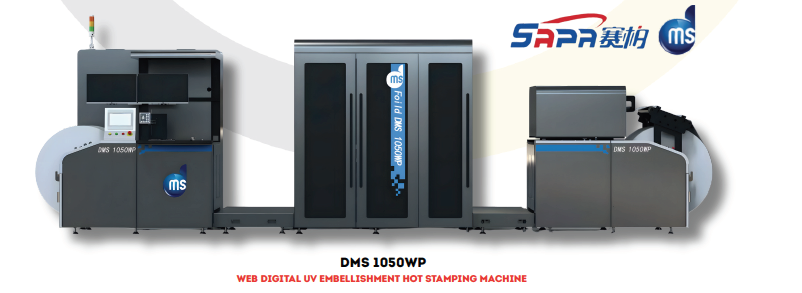
For customers specifically looking for digital spot UV, we would recommend a suitable digital embellishment system as a complementary technology, because spot-UV capability depends on the particular digital finishing platform rather than being a standard feature of every flexographic press. At Ankan Graphics LTD, our focus is therefore on helping packaging converters select the right combination of flexographic printing, inline embellishment, coating, foiling, lamination, and die-cutting to produce premium packaging that commands greater value in the marketplace. In short, Hontec’s inline narrow-web flexo technology is particularly well positioned for converters producing premium labels, flexible packaging, mono cartons, and cigarette cartons who want to combine high-quality printing with value-added finishing in an efficient, integrated production line.
AS YOUR MACHINES ARE HIGHLY ADVANCED, DO YOU PROVIDE COMPREHENSIVE ON-SITE OPERATOR TRAINING AND CERTIFICATIONS FOR YOUR CLIENTS’ LOCAL STAFF?
Yes, we consider operator training and knowledge transfer an essential part of every machinery installation, particularly because many of the technologies we supply are highly automated and require trained operators to achieve their full potential. Our training begins during installation and commissioning. Our technical team works with the customer’s operators and supervisors on the factory floor, covering machine operation, start-up and shutdown procedures, job setup, changeovers, production settings, quality control, troubleshooting, cleaning, and routine preventive maintenance.
For more advanced equipment, we provide practical, hands-on training using the customer’s own machine and production environment. This allows operators to learn how to handle the actual substrates, inks, packaging materials, and production requirements they will encounter in day-to-day operations. We also place strong emphasis on safety and preventive maintenance, ensuring that operators understand not only how to run the equipment but also how to identify early warning signs, carry out routine checks, and operate the machine safely.
Where the OEM provides formal training or certification programs, we coordinate with the manufacturer to ensure that the appropriate personnel receive the relevant OEM-backed training and certification. For specialized machinery, additional technical training can also be arranged when required. Our objective is to ensure that customers are not simply handed a sophisticated machine. They receive a fully commissioned production solution with competent local operators who understand how to run, maintain, and troubleshoot the equipment effectively. This approach helps our clients achieve faster ramp-up after installation, reduce operator errors and downtime, maintain consistent product quality, and get the maximum return from their investment.
ACQUIRING BRAND-NEW PRESSES CAN BE HIGHLY CAPITAL-INTENSIVE, AMONG OTHER FACTORS, FOR A SMALL/MEDIUM-SCALE PRINT & ALLIED BUSINESS. TELL US ABOUT ANKAN GRAPHICS’ PRE-OWNED PROGRAM AND WHY PRINTING COMPANIES SHOULD TAKE ADVANTAGE OF IT?
We understand that acquiring brand-new printing and packaging machinery represents a significant investment, particularly for small and medium-sized businesses. However, we do not operate a pre-owned or second-hand machinery program. Our focus is on supplying brand-new equipment from reputable international OEM partners, backed by proper installation, commissioning, training, spare parts, and after-sales technical support. We believe there are important advantages to investing in new technology. Customers receive the latest machine specifications, current automation and energy-efficiency features, full manufacturer support, and equipment configured specifically for their production requirements. It also gives them greater confidence in long-term reliability and access to genuine OEM spare parts and technical expertise.
We also recognize that capital expenditure is a major consideration for SMEs. Rather than compromising on equipment quality by moving to used machinery, we work with customers to identify the right machine configuration, production capacity, and level of automation for their budget and business objectives. Where appropriate, we can also discuss commercially viable financing or payment structures available for the project. Our philosophy is that the right investment should provide value over the entire operating life of the machine—not simply a lower purchase price. By supplying new machinery and supporting it locally with installation, operator training, preventive maintenance, genuine spare parts, and technical service, we aim to help our customers achieve reliable production, lower downtime, consistent quality, and a stronger return on investment. So, our message to printing and packaging companies is clear: Ankan Graphics LTD does not sell pre-owned machinery. We focus on new, proven technology and provide the technical support required to make that investment successful.
ARE THERE SPECIALS, PROMOS, OR DISCOUNTS THAT YOU’RE OFFERING TO YOUR CLIENTS THIS YEAR?
Yes, we are taking a more project-specific and value-driven approach to commercial offers rather than applying a blanket discount across all machinery. Depending on the equipment, project size, and customer requirements, we may have special pricing, promotional packages, bundled technical support, installation and commissioning arrangements, operator training, or other commercial incentives available on selected machines and projects.
For customers investing in complete printing, packaging, or converting lines, we can also look at the overall project and structure the commercial proposal around the customer’s production objectives. This may provide better value than simply reducing the purchase price of an individual machine. We also encourage customers to discuss their requirements with us early, because some of our international OEM partners may have time-limited promotional programmes, special equipment offers, or factory incentives that can be incorporated into qualifying projects.
Our priority, however, is to make sure the customer gets the right technology at the right total cost of ownership. A low initial price is not necessarily the best deal if the machine does not deliver the required productivity, quality, reliability, and after-sales support. So, for 2026, our message is: there are opportunities for special commercial offers on selected projects, and we encourage customers to speak with us directly so we can develop a package around their specific machinery and investment requirements.
WHAT ASSURANCE ARE YOU GIVING YOUR CUSTOMERS THIS 2026 AND BEYOND TO GUARANTEE YOUR COMMITMENT TO THEIR NEEDS ANYTIME, ANY DAY?
Our assurance to every customer in 2026 and beyond is simple: we are committed to being a long-term technology and service partner, not just a machinery supplier. At Ankan Graphics LTD, our responsibility does not end when a machine is delivered and installed. We remain committed to supporting our customers throughout the working life of their equipment through technical assistance, preventive maintenance, genuine OEM spare parts, operator training, troubleshooting, and ongoing after-sales support.
We understand that our customers operate in a demanding business environment where downtime can be costly. That is why we place strong emphasis on responsiveness, proper installation and commissioning, preventive maintenance, and ensuring that our technical team understands the equipment we supply. We also remain closely connected to our international OEM partners, giving us access to their technical expertise, product updates, engineering support, and genuine components when required. As our customers’ businesses grow, we can also work with them to identify opportunities for capacity expansion, automation, new applications, and upgrades.
Most importantly, we want our customers to know that when they invest in technology through Ankan Graphics LTD, they are not investing alone. We stand behind the solution and remain available to support them through the challenges and opportunities that come with running a modern printing, packaging, or converting operation. Our commitment for 2026 and beyond is therefore built on reliability, responsiveness, technical competence, genuine support, and long-term partnership. We are here to support our customers—not just when they buy a machine, but whenever they need us to help keep their business moving forward.
THANK YOU, SIR, FOR SPEAKING WITH US
Thank you too for the interview. We sincerely appreciate you taking the time to interview us at Ankan Graphics LTD. This is because we truly appreciate the opportunity to share our insights, experience, technology solutions, and vision for the future of the printing, packaging, and allied industries in Nigeria and across West Africa. We particularly thank WHERE To Print magazine for providing this valuable platform to discuss industry trends, innovation, sustainability, automation, and the importance of reliable technology and after-sales support. We look forward to continuing to contribute to the growth and development of the printing and packaging industry in the region because our belief at Ankan Graphics LTD is centred on Technology, Partnership, and Progress.