

GrowInk is a revolutionary biological innovation that replaces toxic, permanent synthetic dyes with “living” ink derived from fungi and bacteria. By aligning the ink’s lifespan with disposable products like packaging, it actively facilitates biodegradation. In this SPECIAL FEATURE ARTICLE written by Debbie McKeegan and culled from www.fespa.com, discover how this shift from chemical permanence to natural ephemerality creates a truly circular, regenerative printing supply chain.
We often judge the quality of a printed product by its longevity. Does the colour fade? Will it withstand the rain? For decades, the printing industry has chased permanence, developing chemical formulations designed to last forever. Yet, this pursuit of durability has created a massive environmental paradox: we print permanent ink onto disposable products.
When a single-use coffee cup or a fast-fashion garment is discarded, the material might eventually break down, but the synthetic dyes and microplastics within the ink often remain, leaching into our soil and waterways. This disconnect between the lifecycle of the product and the lifecycle of the ink is a critical design flaw in the manufacturing supply chain.
But what if ink could do more than just provide colour? What if it could actively help the material beneath it return to the earth?
This is the question driving GrowInk, a groundbreaking innovation founded by Peerasin Punxh Hutaphaet during the MA Material Futures programme at Central Saint Martins. The project explores how fungi and bacteria can be combined with CMYK inkjet technology to create self-decomposing, regenerative prints. Applications range from posters and packaging to textiles, with the aim of reducing the environmental impact of conventional printing. By exploring an alternative lifecycle for ink, one that involves both application and degradation, GrowInk is challenging our perceptions of value and rewriting the rules of circularity in the printing industry.
THE PROBLEM WITH PERMANENCE
The current standard for industrial ink relies heavily on petrochemicals. From digital textile printing to packaging, the process is extractive and consumptive. We extract resources, process them with harsh chemicals to ensure stability, apply them to materials, and eventually discard them.
Nature, however, operates differently. In the natural world, there is no waste, only feedstock for the next cycle. A fallen leaf provides nutrients for the soil. This concept of symbiosis is largely absent in modern printing.
As discussed in a recent FESPA podcast, the industry faces significant environmental drawbacks. The sheer volume of synthetic dyes entering our ecosystem contributes to pollution and hinders the biodegradability of otherwise compostable materials. To truly build circularity into the value chain, we cannot simply focus on the substrate (the paper or fabric); we must address the chemistry sitting on top of it.
ENTER GROWINK: WHERE BIOLOGY MEETS DESIGN
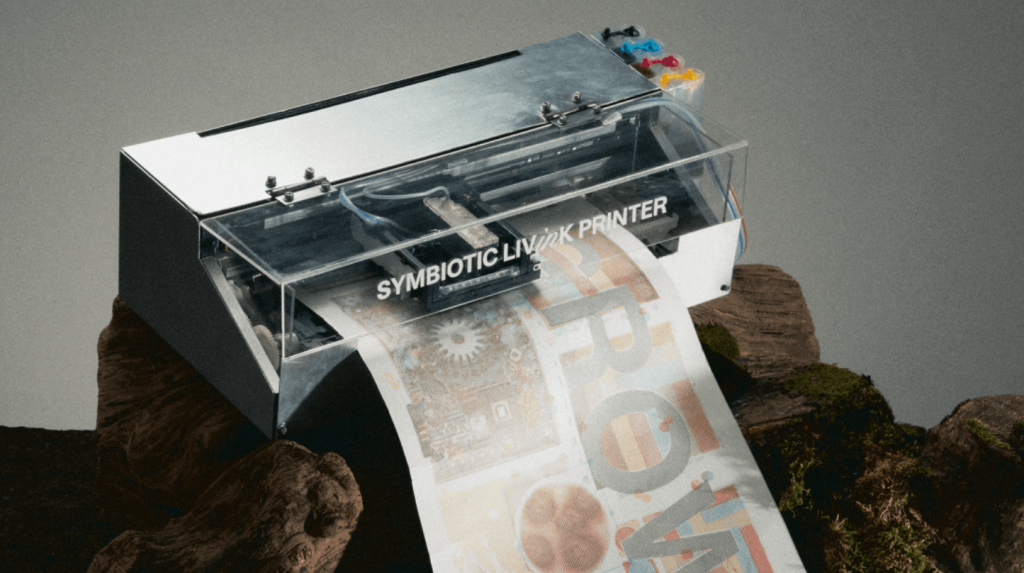
GrowInk represents a radical shift from chemical engineering to biological design. The concept was born from a simple observation of waste in London, specifically, the persistence of litter. Perrasin sought to create a solution where the ink itself could degrade plastic and other materials.
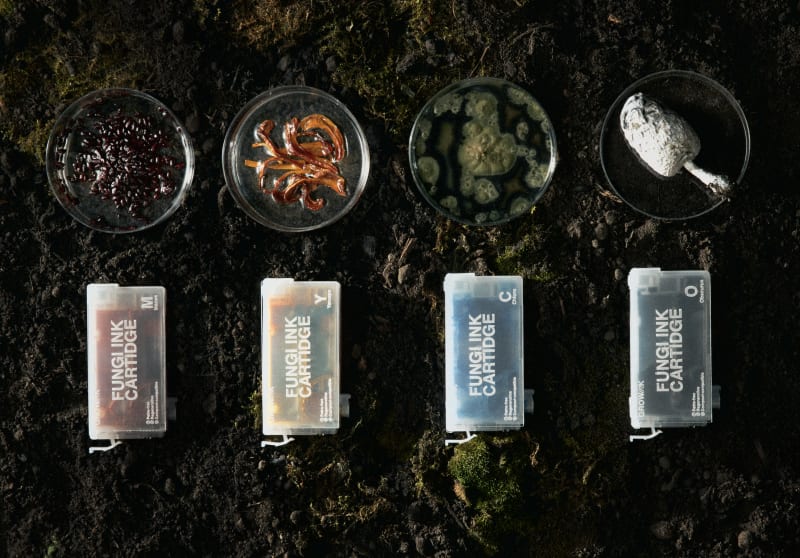
The innovation lies in its ingredients. Instead of synthetic polymers, GrowInk utilizes natural pigments derived from:
- Flowers and Fungi: For vibrant reds, blues, and yellows.
- Charcoal and natural sources: For deep blacks.
However, the true breakthrough is not just the source of the colour, but the inclusion of specific bacteria. GrowInk is a living material. The bacterial component within the formulation remains dormant while dry but becomes active under specific environmental conditions, accelerating the degradation process of the ink and potentially the material it is printed on.
THE COLOUR SPECTRUM OF NATURE
One of the historical challenges with natural dyes has been achieving a full spectrum of colour that rivals synthetic options. GrowInk has successfully developed a primary palette: Red, Blue, Yellow, and Black. This mimics the CMYK standard used in traditional printing, suggesting that bio-based alternatives can eventually scale to meet industrial needs without sacrificing aesthetic variety.
A NEW LIFECYCLE: APPLICATION AND DEGRADATION
To understand the potential of GrowInk, we must look at its lifecycle. Traditional ink has a linear life: it is applied, and it stays. GrowInk introduces a circular lifecycle.
© www.fespa.com
About the AUTHOR

Debbie McKeegan is the CEO of TexIntel. As a multi-disciplinary creative and renowned digital print pioneer, she holds over 25 years of experience within the Textile manufacturing industry. An award-winning textile designer and lifetime manufacturer of printed products for Fashion and Interiors, she has a unique insight that combines creativity with a deep knowledge of traditional manufacturing processes and the essential application of disruptive digital technologies. Her family has been in the printing industry since 1968.